
By the autumn of 1977, people were arguing about Linda Ronstadt’s “Blue Bayou” before they’d even heard it — which tells you something about the cultural weather that year. Roy Orbison had written the song with Joe Melson in 1961, shaped it somewhere on a road trip between Arkansas and Texas, and released it on Monument Records as a B-side in 1963. It scraped to No. 29 on the American charts while its A-side did the heavy lifting.
>>> Scroll down for the video <<<
Orbison’s version did better overseas — No. 3 in the UK, a chart-topper in Australia — but in the country that made him, the song drifted, beautiful and undervalued. Then fourteen years later, a woman from Tucson with a voice like a held breath reached down and pulled it into the light.
Ronstadt’s version, released in August 1977 from her album Simple Dreams on Asylum Records, climbed to No. 3 on the Billboard Hot 100, No. 2 on the country chart, became her first platinum single, and earned Grammy nominations for Record of the Year and Best Female Pop Vocal Performance. The debate, for anyone who loved either version, was genuinely difficult: which one was the real song?
The Original: A Man on the Road, Aching Toward Home
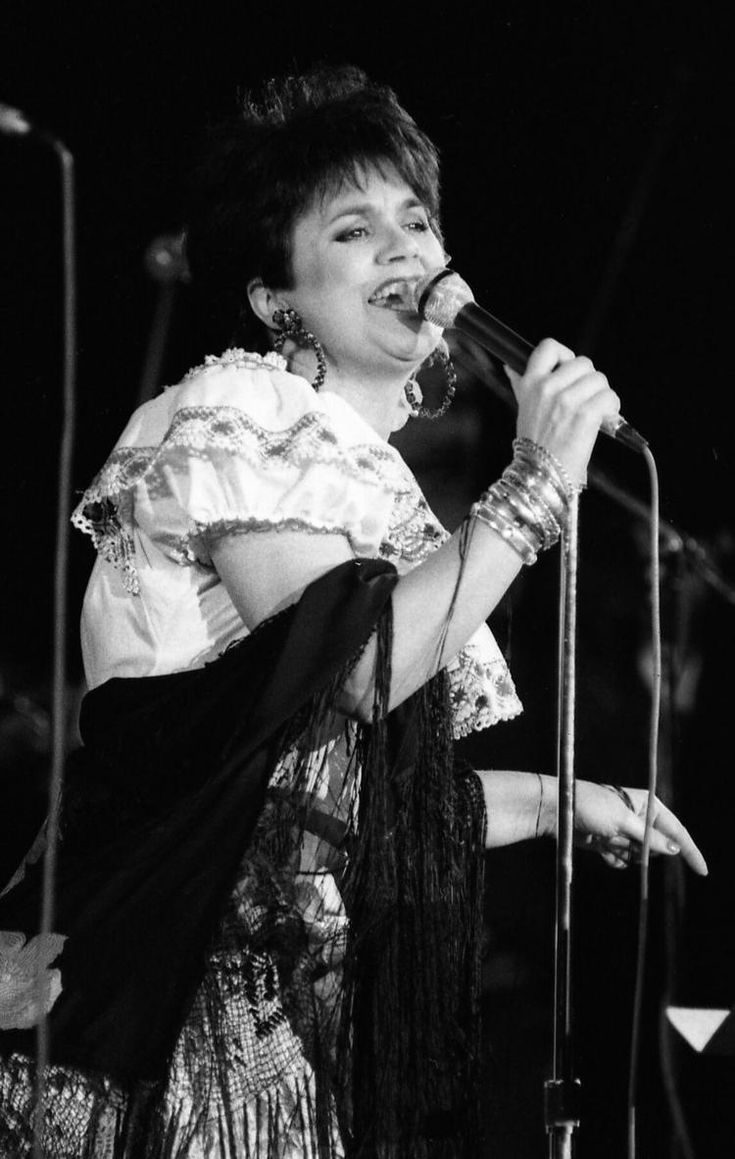
Orbison’s “Blue Bayou” is a song about longing that somehow refuses to be mournful. He said so himself — and it’s worth pausing on that, because almost no one believed him. In an interview, he described it plainly: a fellow bound and determined to get back to a place where you sleep all day, the catfish play, the sailboats drift, and a girl is waiting. “Granted, that is a sad song, a lonely song,” he told one interviewer, “but it’s a loneliness that precedes happiness.” The original recording carries that paradox in every measure.
The voice arrives like something from far away — high and isolated, suspended over the melody rather than resting inside it. There’s a harmonica. There are the lush, slightly formal harmonies that saturate early-’60s pop like afternoon light through old curtains. The whole arrangement feels like a man at a great distance from where he wants to be, describing the view from that distance with calm, methodical tenderness. It is a beautiful song. It doesn’t ask for you to rescue it. It watches. It waits.
A Profitable Night in 1977
J.D. Souther taught Ronstadt the song on the same night she first heard “Poor Poor Pitiful Me.” They were deep in the Los Angeles songwriter community that circled the Eagles, Asylum Records, and Ronstadt’s own orbit — a world of late-night guitars and fast talk and tapes that, as she once recalled, sounded like R2D2.
Souther started playing “Blue Bayou” and Ronstadt fell instinctively into harmony. “I said, ‘I’m going to learn that,'” she told PopMatters. “That was a profitable night.” Glenn Frey of the Eagles was there too, also pushing the song on her. Her producer Peter Asher, meanwhile, had doubts — he worried it wasn’t commercial enough and asked for insurance. Ronstadt didn’t blink. She knew.
“If we disagree on something, I really re-examine it and if I still think I’m right, I go ahead. I knew it was a hit and it was the biggest single I’ve ever had.” — Linda Ronstadt, Playboy, 1980 She was right. The recording that emerged from those sessions is layered with something unusual — mandolin, marimba, a steel guitar solo by Dan Dugmore that sounds like sunlight on water.
Don Henley sang harmonies on the second chorus, along with Kenny Edwards on bass. Originally, Ronstadt had imagined doing it as a duet with Souther. She ended up singing it alone — and that decision, whatever its origins, was essential. The song needed one voice, singular and unshared. It needed to come from one chest, one memory, one longing that couldn’t be halved.
What changed in her version, emotionally, was the temperature. Orbison’s longing looks outward, toward the horizon, forward in time. Ronstadt’s looks inward, backward — toward something already lost rather than simply delayed. Where his voice floats above the landscape, hers is inside it, touching the reeds, feeling the warm mud of the bank underfoot.
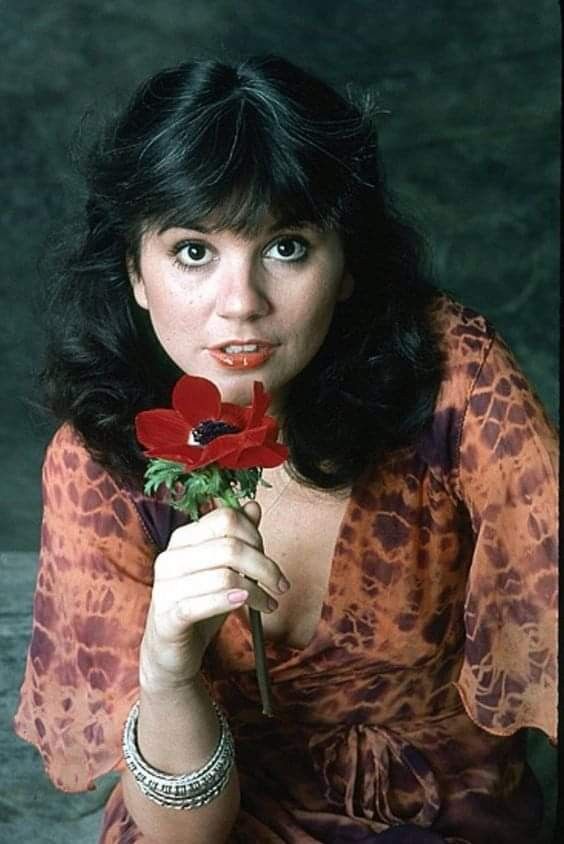
She doesn’t sing about the bayou. She inhabits it. And because she inhabits it, so do you. The song’s famous restraint — that careful, unhurried way she lets the verses breathe, then gathers herself just enough to swell into the chorus without breaking it — reads less as technique than as honesty. She is not performing longing. She is reporting it from the inside.
By late 1977, Ronstadt was the most successful female artist in the country by nearly any measure. Simple Dreams had knocked Fleetwood Mac’s Rumours off the top of the Billboard 200 after nine weeks at No. 2. The album would eventually sell over three and a half million copies in the US alone, a record for a female artist at the time. “Blue Bayou” and “It’s So Easy” simultaneously occupied the Top 5 — a feat no female artist had pulled off, and a marker matched only by the Beatles in that era.
When she translated “Blue Bayou” into Spanish for a 1978 single — her father Gilbert Ronstadt did the translation — the song revealed something that had always been there: a border in the music, not just of genre but of inheritance. She had grown up in Arizona with Mexican corridos in her blood, folk and country and bolero all tangled together. “Blue Bayou,” whatever Orbison had written, arrived in her voice as something that also belonged to that tradition — the love song to a place you can no longer reach.

Hey readers! Chip Holland here, and I’m a Manager of this website. My passion for writing about it only matches my passion for BBQ. Follow my blog for mouth-watering recipes, tips, and tricks for the perfect smoke, grill, and BBQ. I’m sure you won’t be disappointed!