Lowell George wrote “Willin'” sometime before 1970, when he was still a young man in Los Angeles dreaming up the band that would become Little Feat. It was a trucker’s song, a CB-radio pastoral about hauling loads through Tucson to Truchas to Tocopah, sustained by the holy trinity of weed, whites, and wine. Little Feat recorded it first on their 1971 debut, then again — slower, better — on Sailin’ Shoes in 1972. Those versions had grit and charm. What they didn’t have was Linda Ronstadt.
Her recording of “Willin'” appeared on Heart Like a Wheel in November 1974 — the album that changed everything for her. Produced by Peter Asher, with Andrew Gold handling the arrangements and Sneaky Pete Kleinow’s pedal steel floating through the mix like smoke off a mountain pass, the record reached number one on the Billboard 200 and earned Grammy nominations for Album of the Year. “You’re No Good” got the Top 40 play, the AM radio spins, the headlines. But over on FM, listeners kept coming back to the song that closed side two — the quiet one, the one that moved like a truck at four in the morning, unhurried and inexorable.
>>> Scroll down for the video <<<
What She Did With Someone Else’s Confession

The song belongs, on paper, to a man behind a wheel. He’s been driven by the snow and warped by the rain. He’s had his head stove in. He’s still on his feet. And he’s still — that word hanging in the air — willin’. In Lowell George’s original telling, the word carried the bravado of someone who’s taken punishment and keeps going anyway. There was something almost comic in its stoicism, the shrug of a guy who’s seen worse.
When Linda Ronstadt sang it, the comedy evaporated. Not because she made it heavier or more operatic — she didn’t. She made it quieter, which turned out to be the more devastating choice. Her voice in 1974 had a quality that no technical description quite catches: it sat right at the border between strength and exposure. She never pushed the lyric toward drama. She let it lie flat, the way exhaustion lies flat. And somehow, in that flatness, the emotional temperature of the whole song shifted.
Lowell George worked with Ronstadt on the arrangement to suit her voice, and reportedly incorporated things he learned from that collaboration back into his own subsequent versions — a rare and generous acknowledgment that what she was doing to his song was not diminishment but discovery. The two had also shared a brief romantic connection, which gives a certain layer of weight to the collaboration — the intimacy between the singer and the songwriter is not only musical.
What the Song Is Really About
“Willin'” has always been described as a trucker song, and it is. But truck driving is a way of life before it is a profession, and the song is really about the willingness — that word again — to keep going after the road has done its worst. To stay on your feet. To accept the terms of a hard life without collapsing into self-pity or hardening into bitterness.
What Ronstadt did was create an unexpected and unprecedented portrait of a hard-working woman — not just a woman doing a man’s job, but a woman the likes of whom had never come bounding out of a radio speaker in human history. In 1974, the women on Top 40 radio were largely positioned at the edge of heartbreak or at the height of glamour. They weren’t warped by rain. They weren’t drunk and dirty. They didn’t have their heads stove in. And yet here was Linda Ronstadt, singing exactly that, in a voice so pure it made the roughness of the lyric ache all the more. The contrast between what she described and how she sounded — not ruined, not defeated, not even particularly bitter — was the whole argument of the performance.
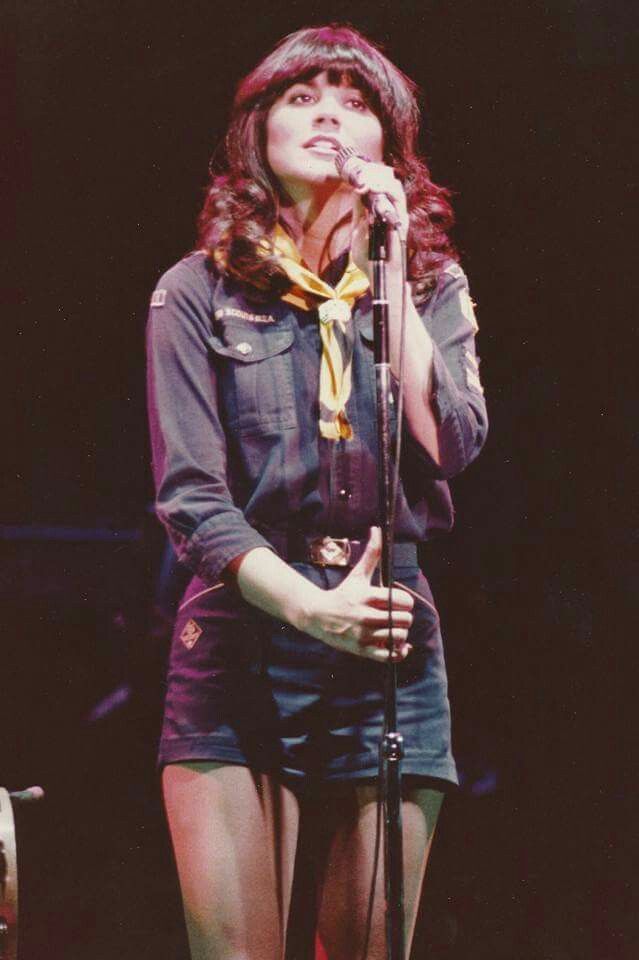
That tension is where the song lives in her hands. Not between humor and sorrow, but between grace and damage. She sounds like someone who has understood that life is hard and has made her peace with it, which is a different thing entirely from being fine. The voice doesn’t beg for sympathy. It doesn’t perform toughness. It simply tells you what it knows, and it knows quite a lot.
What It Left Behind
Heart Like a Wheel was selected by the Library of Congress for induction into the National Recording Registry in 2013 — a designation reserved for recordings that are culturally, historically, or aesthetically significant. The whole album earned that honor, but “Willin'” is the track that keeps finding new listeners, that keeps getting passed between friends the way certain songs do, like a book you press into someone’s hands and say: you need to hear this.
The song has since been covered by an extraordinary range of artists — the Allman Brothers, the Grateful Dead, the Black Crowes, Tom Petty, Jackson Browne — which is its own kind of testament to how much road it contains. But none of those versions ended the conversation. Ronstadt’s did something most covers can’t: it became a definitive reading without erasing the original. It simply expanded what the song was capable of meaning.

Hey readers! Chip Holland here, and I’m a Manager of this website. My passion for writing about it only matches my passion for BBQ. Follow my blog for mouth-watering recipes, tips, and tricks for the perfect smoke, grill, and BBQ. I’m sure you won’t be disappointed!