Paul Anka wrote “It Doesn’t Matter Anymore” for Buddy Holly, who recorded it in October 1958. The song was released in January 1959, less than a month before Holly was killed in a plane crash on February 3rd of that year, and climbed to number 13 on the Billboard Hot 100 as a posthumous hit. In the United Kingdom, it became the country’s first posthumous number one — a fact so heavy it bends the song’s meaning before anyone else even picks it up.
Anka later donated his royalties from the song to Holly’s widow, a gesture that bound the two men’s lives together in a way the music itself couldn’t have anticipated. By the time Linda Ronstadt came to it in 1974, the song was already carrying the weight of an entire mythology — youth, loss, a life cut short mid-sentence.
>>> Scroll down for the video <<<
What She Did to It

Heart Like a Wheel, released in November 1974, became Ronstadt’s first album to reach the top of the Billboard 200. It was nominated for Album of the Year at the 18th Annual Grammy Awards and was later selected by the Library of Congress for the National Recording Registry, then inducted into the Grammy Hall of Fame in 2018.
All of that matters for context, but it tells you nothing about what it feels like to sit inside the album on a quiet afternoon and hear Ronstadt arrive at “It Doesn’t Matter Anymore” after the charged electricity of “You’re No Good” and the defiant stomp of “When Will I Be Loved.” The song comes in like a room after a storm — still, wide, the air changed.
Where Holly’s original bounces with a kind of bright, almost cheerful bounce — the musical equivalent of a boy whistling past sadness — Ronstadt strips the tempo back and lets the lyric breathe until you can feel the space around each word. Producer Peter Asher ran a winsome harmonica through the arrangement, and the effect is of distance — of looking down a road at something that is already gone.
Ronstadt doesn’t sing this song the way a young woman would. She sings it the way a woman who has already been through the fire sings about cooling ash. There is knowledge in the delivery, and knowledge is a heavier thing than innocence.
The phrase “it doesn’t matter anymore” is grammatically a dismissal. Emotionally, it is the opposite. You only say something doesn’t matter when it still does, very much, and you are trying to convince the part of yourself that hasn’t gotten the message yet. Ronstadt seems to understand this completely.
She does not lean on the words for drama; she delivers them with a practiced evenness that is more devastating than any plea would be. The song becomes less a breakup declaration than a private negotiation — the kind you have with yourself in the kitchen at eleven o’clock at night, when there’s no one there to see you being reasonable.
The Album It Belongs To
The ghosts of Gram Parsons and Buddy Holly move through the entire record — Heart Like a Wheel is, among other things, a sustained act of tribute to people and sounds that formed her. Ronstadt grew up in Tucson listening to the radio at a frequency that picked up country, early rock and roll, and Mexican folk songs simultaneously, and she never really separated those things in her heart. Covering Holly wasn’t nostalgia for her. It was lineage.
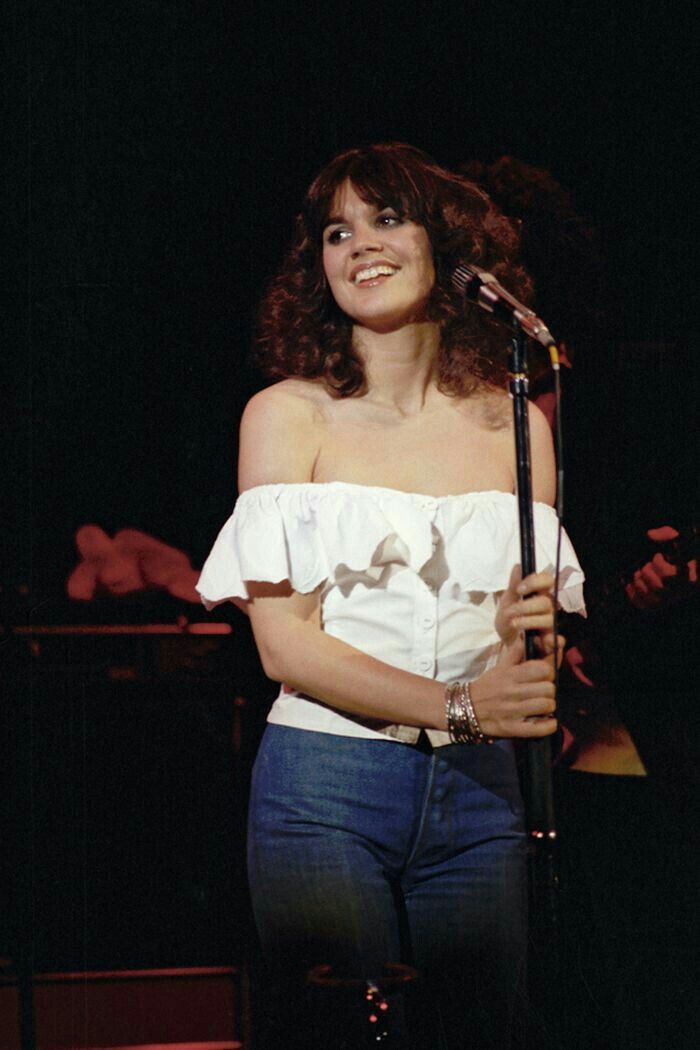
Alongside her, the album featured Glenn Frey, Don Henley, Russ Kunkel, David Lindley, and the remarkable multi-instrumentalist Andrew Gold, whose contributions shaped the arrangements throughout. This was the California folk-rock circle at the height of its creative density, a community of musicians who could move between tenderness and grit in a single bar. What they built around Ronstadt on this song is almost architectural in its understatement — the structure exists entirely to keep her voice from disappearing into the open air.
What the song contributed to the album’s larger emotional argument was equilibrium. Heart Like a Wheel had tracks that crackled and ached and demanded. “It Doesn’t Matter Anymore” was the track that exhaled. It was where the album — and by extension, Ronstadt — let go, or at least tried to. The other songs on the record are about being wronged, wanting someone, fighting to feel something or feeling too much. This one is about the morning after all of that. It is the only song on the album that doesn’t need to raise its voice.
What Stays After It Ends
Buddy Holly recorded that song with his whole life still in front of him. The lighthearted swing in his version — the little hiccup in his voice, the bounce in the rhythm — comes from a man who meant it playfully, even affectionately. Moving on was easy, in 1958, at twenty-two. Ronstadt sings it from another place entirely — one where moving on is a choice you make over and over, not a destination you arrive at. The song passes through her and comes out changed, the way light changes when it passes through water. Same frequency, different quality.
That’s the gift she gave it. Not volume, not spectacle — just depth of field. She found the layer beneath the lyric that Holly, through no fault of his own, could not yet have reached.

Hey readers! Chip Holland here, and I’m a Manager of this website. My passion for writing about it only matches my passion for BBQ. Follow my blog for mouth-watering recipes, tips, and tricks for the perfect smoke, grill, and BBQ. I’m sure you won’t be disappointed!