
I have everything I need. Given that both the Smokey Robinson original and the Ronstadt cover are culturally significant — and the essay’s most interesting axis is the relationship between the two versions — I’ll use Format A: The Great Debate, though with Ronstadt’s version as the emotional center.
>>> Scroll down for the video <<<
The Song That Fits Two Voices Perfectly
There are certain songs that arrive so complete, so sealed in their own perfection, that covering them feels like an act of either courage or folly. “The Tracks of My Tears” is one of those songs. Written by Smokey Robinson, Pete Moore, and Marv Tarplin, and first recorded by the Miracles on the Tamla label in 1965, it climbed to No. 2 on the Billboard R&B chart, reached No. 16 on the Hot 100, and eventually entered the Grammy Hall of Fame, the Library of Congress National Recording Registry, and Rolling Stone’s list of the 500 Greatest Songs of All Time — landing, in 2021, at the very top of that magazine’s ranking of the greatest Motown song ever made.
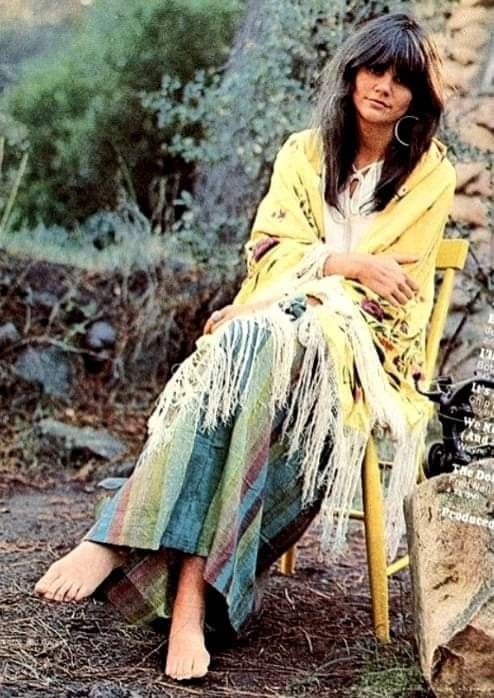
A decade after its release, Linda Ronstadt took the song and made it hers. Her version appeared on Prisoner in Disguise, her 1975 Asylum Records album, produced by Peter Asher — and it peaked at No. 25 on the Hot 100, No. 11 on the country chart, and reached the UK Top 50. People have been comparing the two recordings ever since. The conversation has never quite settled.
So which version do you reach for? And what does it mean that you might reach for both, depending on what kind of grief the day has handed you?
What Smokey Robinson Built
The Miracles’ original is almost impossibly elegant. Marv Tarplin’s opening guitar figure — a melodic curl that Smokey Robinson has described as the seed the whole song grew from — sounds like a question being asked in a room where the lights have just gone down. The song’s central idea is devastating in its simplicity: the singer is the life of the party, the one who makes everyone laugh, who wears a smile like good manners. But look closely at his face.
Underneath all that warmth and charm is a man whose heart broke a long time ago and has been performing ever since. Robinson sings it with the composure of someone who has mastered the public self — the voice stays controlled, graceful, almost courtly. It is heartbreak that has learned to dress well. The genius of the original is that you believe his smile even as he explains that the smile is a lie. That is a very specific emotional trick, and Robinson pulls it off without apparent effort, which is the hardest kind of effort there is.
What Linda Ronstadt Found Inside It
By the time Linda Ronstadt recorded the song in 1975, she was coming off the commercial breakthrough of Heart Like a Wheel, her first No. 1 album. She was also in the middle of establishing herself as the great interpreter of her generation — someone who could inhabit another songwriter’s words so completely that you briefly forgot they hadn’t been written for her.

Her instinct with “The Tracks of My Tears” was not to compete with Robinson’s original on its own terrain. She did not reach for his silkiness or his particular brand of stoic grace. Instead, she brought something earthier, more openly wounded. Where Robinson’s performance sits on top of the pain like a man keeping his composure at a funeral, Ronstadt’s feels like the same grief seen from the inside.
Peter Asher’s production made a key decision: it returned to Marv Tarplin’s guitar figure, this time rendered on acoustic guitar by Andrew Gold, and then let pedal steel — played by Dan Dugmore — drift through the arrangement like weather moving through a valley. The Motown pulse was still there, but the feel had shifted. Something prairie had entered the room.
Country music and soul music share the same obsession — the performance of dignity in the face of private devastation — and Ronstadt understood that in her bones. Her voice on this recording has a quality that is difficult to name precisely: it is clear, almost girlish in its purity, but it carries weight. She does not lean on the lyrics; she walks through them. And when the emotion rises, it rises naturally, the way a flood rises — not a dramatic crest but a slow, inexorable covering of the ground.
Engineer Val Garay has noted that Ronstadt would sit in the lobby while the band tracked in the morning, seemingly at rest, then step in for her vocal and deliver it in one or two takes with no corrections. What sounds on record like deep feeling worked out over time was in fact immediate — a first-draft performance offered up fully formed. That quality of spontaneity is part of what gives the recording its warmth. You hear a singer catching the emotion in real time rather than constructing it.
Hey readers! Chip Holland here, and I’m a Manager of this website. My passion for writing about it only matches my passion for BBQ. Follow my blog for mouth-watering recipes, tips, and tricks for the perfect smoke, grill, and BBQ. I’m sure you won’t be disappointed!