
By 1995, Linda Ronstadt had already lived several lifetimes inside a single career. No one had ever moved quite the way she moved, and no one had done it with such apparent ease. Every genre she touched, she inhabited fully. Every song she picked up, she seemed to have always known.
When Walt Disney Records approached her to record for The Music of Disney’s Cinderella — a 1995 tribute project timed to coincide with the animated film’s 45th anniversary — they weren’t handing her a curiosity. They were handing her a song that had waited, maybe, exactly long enough.
>>> Scroll down for the video <<<
The original film performance, delivered by Ilene Woods, whose voice Disney chose after hearing her sing on a demo recorded as a favor to the songwriters, is all innocence: clear and bell-like, a girl’s voice making a private vow. What Linda Ronstadt does with it, four and a half decades later, is something else entirely
What Experience Does to a Wish
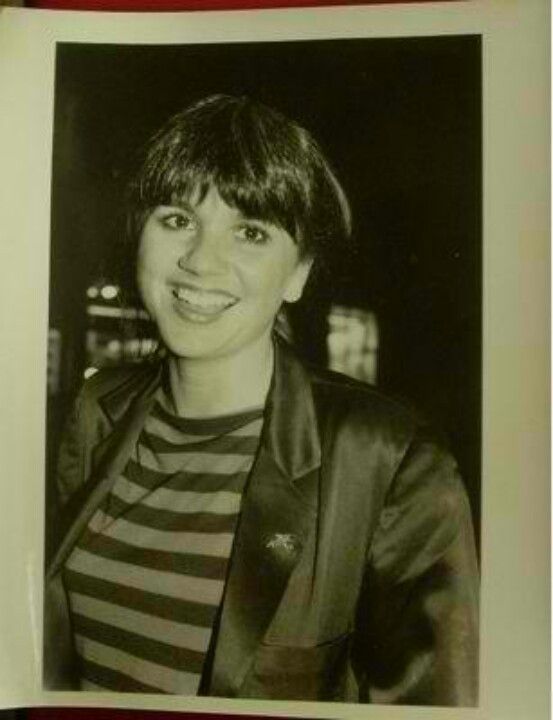
Ronstadt does not hurry it. That, alone, is a kind of statement. Her voice in this recording sits lower than Ilene Woods’s — not in technical register, but in emotional weight, the way a grown person sits differently in a chair than a child does. There is gravity in how she arrives at each phrase, a sense that the words have traveled distance before landing. When the melody asks for hope, she gives it — but she gives it the way someone gives it who has also known what it costs to keep hoping. This is the difference between a wish sung in the morning and a wish remembered at night.
She also refuses sentimentality, and this is the recording’s quiet masterstroke. Another singer might have leaned on the lullaby quality, softened everything into something safe and nostalgic. Ronstadt holds a certain stillness instead — she keeps the melody tender but leaves the corners sharp. The song is, underneath its reassurance, a coping mechanism.
Cinderella does not sing it because her life is good. She sings it because her life is hard, and the dream is the one place no one can reach her. Ronstadt understands this. She doesn’t decorate the song. She inhabits its real purpose: the act of holding something beautiful inside you, protected, while the world outside does whatever it wants.
The production, helmed by Allen Sides and David Pack, gives the recording space. Nothing crowds her. The arrangement arrives gently and then retreats, as if aware that the voice is the whole argument. And Ronstadt also recorded a Spanish-language version — Un Precioso Sueño — for the same release, a reminder of where she had come from and what she had never let go of.
Her paternal family’s roots traced back to Sonora, Mexico, and music had always been the language she used to hold that inheritance close. That she recorded this Disney song in two languages was not a commercial calculation. It was a person singing a song about dreams in both halves of herself.
The Thing the Song Is Really About

What the listener feels in Ronstadt’s version — and it is a feeling that arrives without announcement, somewhere in the middle of the song, as the melody curls back on itself — is the recognition of personal discipline. To believe in something you cannot yet see, to carry that belief quietly through ordinary days, not as naïveté but as a practiced inner act: this is what the song is actually teaching.
Ilene Woods sang it as a girl on the edge of her story. Ronstadt sings it as a woman who has lived enough of hers to know that hope is not a feeling that comes naturally. It is something you decide, again and again, every morning.
That knowledge haunts this recording with a particular tenderness now. Not long after making it, Ronstadt began to notice that something was changing in her voice — a tightening, a clamping, a failure of the instrument she had used since childhood to say everything she needed to say. By 2000, she knew something was wrong. By 2012, she had a diagnosis: Parkinson’s disease, later reclassified as progressive supranuclear palsy, a condition for which there is no cure. She delivered her final concert in 2009.
Her last recording came out in 2006. And then the voice — the thing that had made her one of the most decorated American vocalists of her generation, a ten-time Grammy winner inducted into the Rock and Roll Hall of Fame in 2014 — was simply gone. “I can still sing in my mind,” she told an interviewer years later. “Sometimes I have to look up the words, because I forget the lyrics. But then I’ll sing a song in my head all the way through, like a hummingbird.”
That is the miracle she performed here. Not a technical feat. Not a reinterpretation in any strategic sense. Just a grown woman picking up a wish that had been left in a children’s story for forty-five years, turning it over in her hands, and handing it back to you as something you can actually use. Put it on late at night, when you need it most. It will find you exactly where you are.

Hey readers! Chip Holland here, and I’m a Manager of this website. My passion for writing about it only matches my passion for BBQ. Follow my blog for mouth-watering recipes, tips, and tricks for the perfect smoke, grill, and BBQ. I’m sure you won’t be disappointed!