Some songs arrive fully formed and still somehow feel unfinished. “Desperado” — written by Don Henley and Glenn Frey, recorded in London at Island Studios with musicians drawn from the London Philharmonic, and released in April 1973 as the title track of the Eagles’ second album — was like that.
Henley had carried a fragment of it since 1968, a melody rooted in Stephen Foster’s 19th-century Southern balladry, and Frey had helped him complete it in a single session at Henley’s home in Laurel Canyon. The resulting album peaked at only No. 41 on the Billboard 200. “Desperado” was never released as a single. And then, a few months later, Linda Ronstadt did something with it that changed everything.
>>> Scroll down for the video <<<
Two versions of the same sky
The question that has followed this song across fifty years is a real one: which version is the song’s truest self? The Eagles gave the world the original. Henley’s voice on that recording is dry and weathered, like wood left out in the sun. He later said he was intimidated by the orchestra in the studio and regretted not singing it better — which is remarkable, because the recording works precisely because of its restraint.
It doesn’t perform loneliness. It inhabits it. The piano introduction, borrowed in spirit from Ray Charles playing “Georgia On My Mind,” sets a mood of late-afternoon resignation. The whole thing feels like something seen from a great distance — a figure on horseback, already too far away to call back.
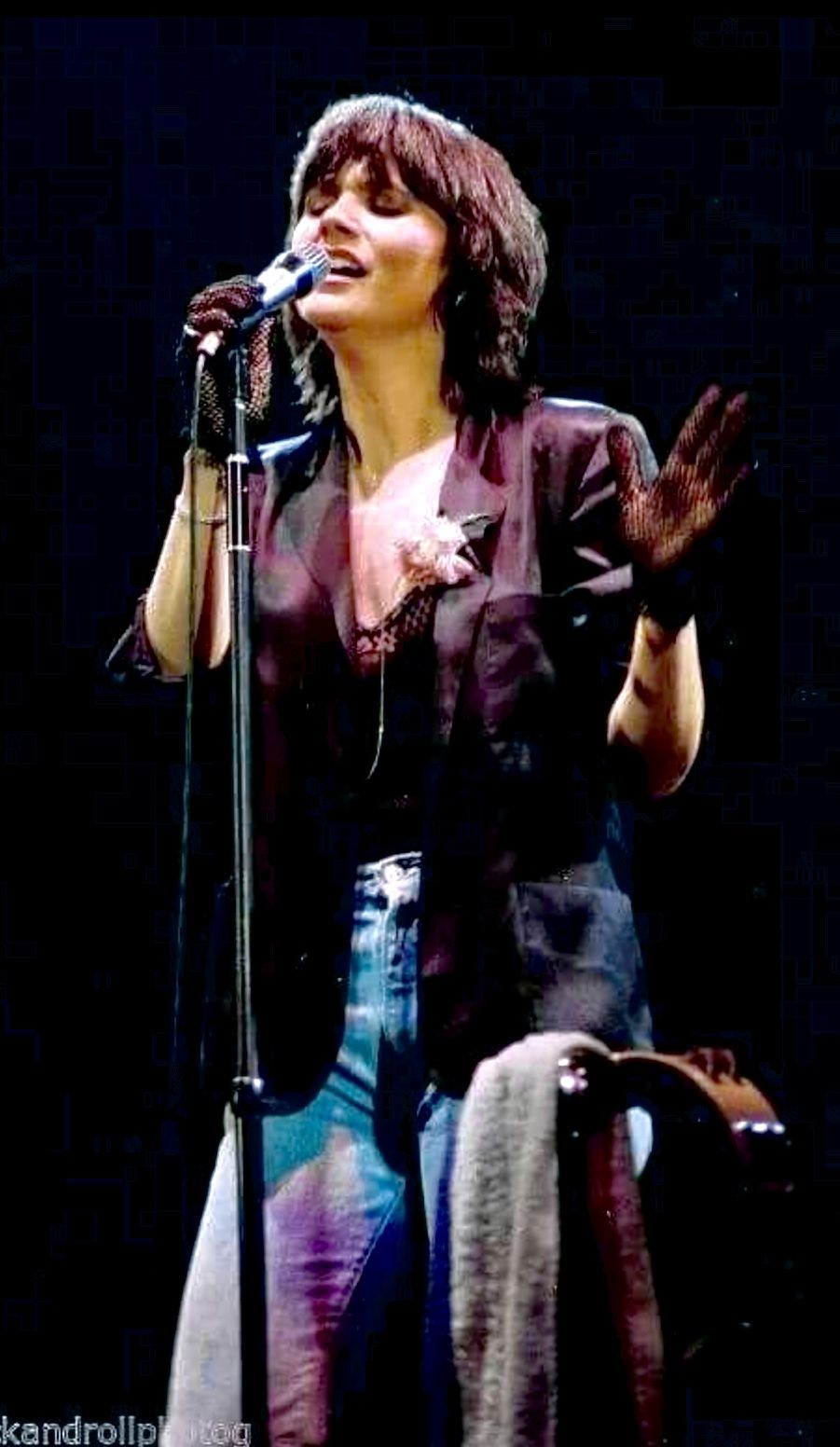
Ronstadt’s version, on her fourth studio album Don’t Cry Now (also 1973), does something else entirely. The album reached No. 45 on the Billboard 200 and lingered on the charts for over a year — long enough to carry the song to audiences who had never found the Eagles’ record. Henley would later credit her directly: “That song didn’t get much attention until Linda Ronstadt recorded it,” he told Rolling Stone in 2016. In the 2013 documentary History of the Eagles, he called her version “poignant, and beautiful.” That is not a polite compliment between industry colleagues. That is a songwriter saying someone understood what he wrote, perhaps better than he did himself.
What her voice revealed
The deeper you look at this, the stranger and more moving it becomes. Henley and Frey had both played in Ronstadt’s touring band in 1971. They rehearsed together, traveled together, and eventually told her they were leaving to form a group of their own. She did not just let them go — she helped them.
As Glenn Frey said at Ronstadt’s Rock and Roll Hall of Fame induction in 2014: “She, more than anyone else, helped us put together the Eagles. And later, she gave our careers a big shot in the arm by recording our song, ‘Desperado.'” The history between them runs in every direction. When Ronstadt sang that song, she was not covering a stranger’s work. She was singing something back to the people who had once played it beside her.
What she heard in the lyric that the original didn’t quite reach — or perhaps did not need to reach — was the ache of the person doing the watching. Henley’s version is the desperado’s song, sung from inside the solitude. Ronstadt’s is the song of someone who loves him anyway, who sees the cost of that loneliness clearly and is still standing there at the window.
Her voice does not sit on top of the melody; it leans into it. The words “why don’t you come to your senses” sound, in her delivery, less like advice and more like grief. She has already made peace with the fact that he won’t. This is not a woman warning a man. This is a woman remembering one.
There is a 1975 performance — caught on film, circulated for decades — in which Ronstadt sings the song live, and the quality of her concentration is striking. She is not performing it for an audience in any conventional sense. She is inhabiting it the way you inhabit a room you know too well. The emotional temperature has changed from the studio version; there is something in the live performance that feels rawer, closer to confession. By that point she had been singing the song for two years, and it had not gotten smaller with repetition. It had grown into the space of her actual life.
What neither version could do alone
The Eagles’ recording gave “Desperado” its shape: that wide, open feeling, the orchestral sweep, the sense of a Western landscape stretching out past the edge of vision. It is a song about the romance of solitude — written by young men who had, as Henley said, chosen to live outside the laws of normality, going from town to town like outlaws, except that they worked for what they got. That frame is essential. Without it, Ronstadt would have nothing to enter. The Eagles built the horizon. She stood in front of it and showed you what the horizon costs.
Perhaps the debate has always been asking the wrong question. Not which version is better, but what it means that a song can be both things at once — distant and close, stoic and wounded, the warning and the wound. The Eagles’ record sits on your shelf like a beautiful object. Ronstadt’s version gets under your skin at two in the morning when you are not sure why you are still awake.
You need them both, the way you need to know what something looks like before you can understand what it feels like to lose it. One version tells you what it is to ride alone. The other tells you what it is to watch someone choose that. Between those two understandings, there is an entire story — and the story is, quietly, everything.
Hey readers! Chip Holland here, and I’m a Manager of this website. My passion for writing about it only matches my passion for BBQ. Follow my blog for mouth-watering recipes, tips, and tricks for the perfect smoke, grill, and BBQ. I’m sure you won’t be disappointed!