
“Hurt So Bad” was written by Teddy Randazzo, Bobby Weinstein, and Bobby Hart, and first recorded by Little Anthony & The Imperials for their album Goin’ Out of My Head, where it became a top ten hit and a top five R&B record. The original is a soul-pop ballad built on pleading — a man asking an ex-lover to acknowledge what she’s done to him, the melody looping like a wound that won’t close. The Lettermen had a version in 1969. The song was well-traveled by the time Ronstadt touched it.
>>> Scroll down for the video <<<
What she did was not preservation. She flipped the gender — now it is a woman watching a man who has moved on, a woman reduced not to sorrow but to something sharper — and then she sang it as though the lyric were not a memory but a live wire. Where the original holds its pain at a slight remove, the way soul ballads of that era tended to dress grief in beautiful clothes, Ronstadt’s version refuses the dress.
The performance is close to the bone from its first notes. Her voice enters already carrying weight. There is no buildup, no warm introduction. The hurt is simply present, the way a bruise is present when you press it.
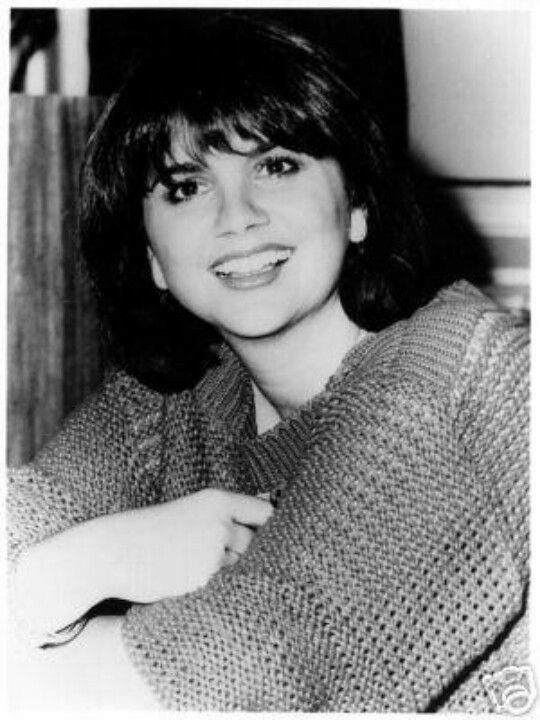
Danny Kortchmar’s guitar solo gives the track its other essential quality: a sting that moves the song away from straight balladry into something more volatile, something that belongs to the same emotional temperature as loss that hasn’t cooled yet. Bill Payne on keyboards, Bob Glaub on bass, Russ Kunkel on drums — the whole arrangement is lean, almost nervous, moving fast enough that the listener never settles into comfort.
The Pressure of Being Ronstadt
Here is the tension that makes this recording extraordinary. By 1980, Ronstadt was telling journalists she wouldn’t do rock and roll forever. She was heading toward Broadway — she spent the summer of that year starring in The Pirates of Penzance in New York — and toward what would eventually become her celebrated Latin albums.
Mad Love was, in many ways, her last stand in a genre she had conquered so completely that the conquest itself had begun to feel like a cage. She was restless. “If everybody’s eating granola this year,” she said at the time, “then everybody’s going to be eating syntho-food next year.” She was tired of being America’s barefoot California sweetheart, which is to say she was tired of being the thing she was best at.
And yet. In the middle of this album of electric nervous energy and Costello covers and new wave gestures, she planted “Hurt So Bad” — a ballad, a fifteen-year-old soul ballad — and sang it with more raw exposure than almost anything else in her catalog. Peter Asher once said that Ronstadt’s great gift was her ability to find a song and wrestle a new meaning and intensity out of it, that when she sang a lyric you could believe she had a specific example in mind. “Hurt So Bad” sounds like the specific example. It sounds less like interpretation than confession.
What it captures, precisely, is not sadness. Sadness implies resignation. This is something more uncomfortable: desire that has nowhere to go, love still metabolically active in the body even as the mind understands it is finished. The performance sits in that gap — between knowing and feeling, between what is over and what will not stop hurting — and does not try to resolve it. Ronstadt does not oversell the emotion or reach for release. She holds the pressure steady, the way a person holds very still when the ache is worst.
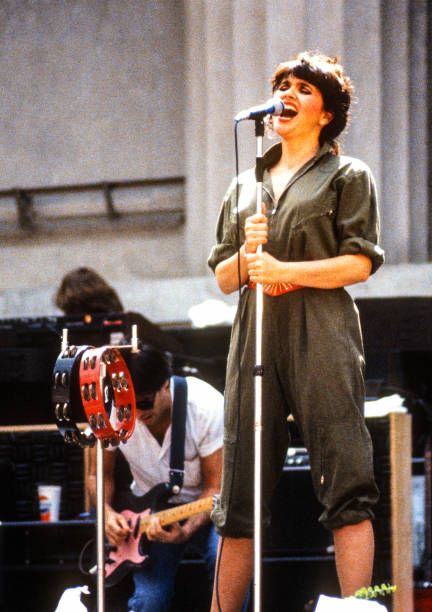
What Lingers
Mad Love has spent decades being slightly misremembered — as a misstep, an awkward experiment, an album Ronstadt herself rarely mentions with warmth. But “Hurt So Bad” quietly survived all of that reappraisal. It peaked higher than any version before it. It earned her a Grammy nomination for Best Female Rock Vocal. It turned out that the most exposed thing on an album designed around a new attitude was the oldest song, sung exactly in the voice she had always had.
There is something in that worth sitting with. The albums we make when we are trying to become someone else sometimes reveal us more completely than the ones where we are playing to our strengths. Ronstadt was running toward something new, and in the middle of the sprint she stopped for three minutes and forty-six seconds and sang about what it feels like when love leaves a mark that won’t fade.
The song had been around for fifteen years. She found the thing in it that no one had fully found before — not Little Anthony, not the Lettermen, not any of the others. She found the part that felt like right now. Long after Mad Love‘s new wave ambitions have receded into history, that part remains: a voice in a room, steady under pressure, singing about the particular weight of something that should have ended but hasn’t.

Hey readers! Chip Holland here, and I’m a Manager of this website. My passion for writing about it only matches my passion for BBQ. Follow my blog for mouth-watering recipes, tips, and tricks for the perfect smoke, grill, and BBQ. I’m sure you won’t be disappointed!