
Neil Young had written “Love Is a Rose” in 1974 for an album called Homegrown, which he ultimately shelved and did not release to the public until 2020. His own recording sat in a vault. He offered the song to Ronstadt, and she took it immediately. Her version appeared as the B-side to “Heat Wave” in August 1975 — technically the secondary track, the one radio was supposed to ignore. Instead, it climbed to No. 5 on the Billboard Hot Country Singles chart on its own momentum. A B-side that charted on its own is usually a sign that something in the recording reached people before they had words for what it was.
>>> Scroll down for the video <<<
What She Heard in the Song
Young’s lyric is not optimistic. Roses have been a shorthand for love for so long the comparison had grown nearly useless — but his angle is different. Love, he argues, is like a rose you can only hold if you leave it on the vine. Pick it, and you’ve already begun the process of losing it. You’re left with a stem and thorns. The song is a warning dressed as a declaration.
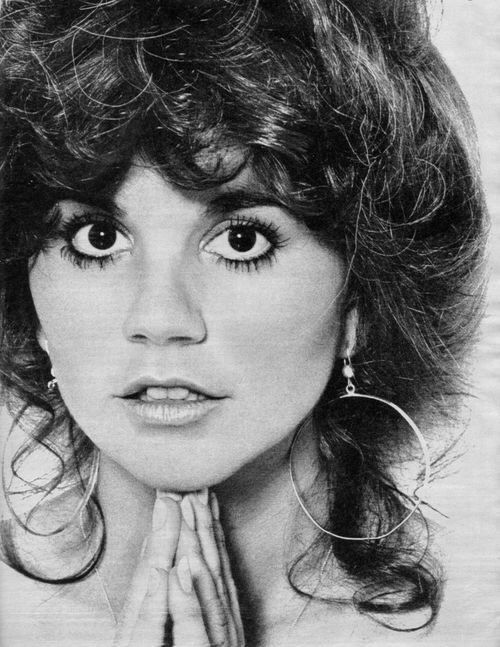
In Ronstadt’s hands, that warning becomes something more ambiguous. Her producer Peter Asher brought in David Lindley on fiddle and Herb Pedersen on banjo, and the track opens with the light, scuffed energy of a country dance — as if the song is trying to look cheerful, trying to put on a good face. Andrew Gold plays acoustic guitar. Kenny Edwards holds the low end steady. Russ Kunkel keeps the rhythm loose and alive beneath everything. The arrangement does not brood. It moves. And that movement is what makes the emotional undertow so quiet and so devastating.
Ronstadt does not sing the lyric as a lament. She doesn’t slow it down to let the sadness show. She rides the tempo like someone who already knows the outcome and has decided to be present anyway — to keep dancing even with the knowledge of what comes next. Her voice sits in that particular register she found throughout the mid-seventies: warm but not soft, assured but with something fragile underneath it, the way a person sounds when they have learned something about love the hard way and have chosen, against all wisdom, to walk toward it anyway. She sounds like someone who would pick the rose.
What This Recording Did to the Song
For the first several years of its public existence, “Love Is a Rose” belonged to Linda Ronstadt. Young’s own recording had not been officially released; when it finally appeared on his 1977 compilation Decade, the world had already heard the song in her voice. She didn’t cover it — she introduced it. She gave it a life before it had an author’s name attached in the public consciousness.
That matters, because her version shaped how the lyric was heard. Young’s instinct was darker, sparer — he sat with the warning. Ronstadt carried the full contradiction: the joy and the grief simultaneously, the way those two things are often inseparable in the actual experience of love rather than in its analysis. She did not resolve the tension Young had written into the song.
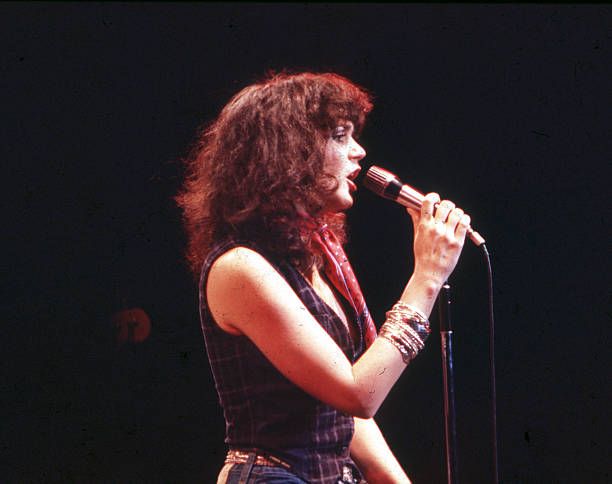
She inhabited it. Ronstadt had spent the early 1970s touring as an opener for Young’s band, singing backup harmonies on “Heart of Gold” and “Old Man” from Harvest. She understood his emotional language from the inside. When she sang his words, she wasn’t translating them — she was continuing them in a different key.
The track lives on Prisoner in Disguise surrounded by other people’s songs — Smokey Robinson, Martha and the Vandellas, Dolly Parton, Jimmy Cliff. That was the specific genius of Ronstadt’s method: she made other people’s material feel autobiographical. Each song she chose seemed, in retrospect, to have been written for her and no one else. “Love Is a Rose” is one of the clearest examples.
On the page, it’s Young’s experience of heartbreak, his split from actress Carrie Snodgress, his specific grief. By the time Ronstadt was done with it, it belonged to anyone who had ever felt the particular ache of loving something they could feel already slipping away.
The Bloom and the Thorn
Here is the thing about this recording that takes time to understand: it is a happy-sounding song about an irreversible loss, and the happiness is not a lie. It is not denial or decoration. Ronstadt understood that some of the saddest truths arrive in bright packaging — that the most heartbreaking moments can feel, in the instant of their occurring, like joy. The fiddle kicks up. The banjo spins. The tempo pulls you forward. And underneath all of it, barely audible if you aren’t listening for it, is the knowledge that you can’t hold on.
Fifty years later — on the occasion of Prisoner in Disguise‘s 50th anniversary reissue, Ronstadt, now 79 and living with Parkinson’s disease, wrote a letter recalling the sessions with the kind of warmth that accumulates in the body the way songs do. She wrote about Peter Asher, about J.D. Souther, about Smokey Robinson, about a three-foot teddy bear named Alfred that Asher placed in her vocal booth because she was, she noted, upset about something — “probably some guy.” The letter is funny and tender and quietly illuminating. It reads like the woman who sang “Love Is a Rose”: someone who has known the thorns and remains, somehow, grateful for the bloom.

Hey readers! Chip Holland here, and I’m a Manager of this website. My passion for writing about it only matches my passion for BBQ. Follow my blog for mouth-watering recipes, tips, and tricks for the perfect smoke, grill, and BBQ. I’m sure you won’t be disappointed!