
The fall of 1986 was a strange moment for animated film. Animation was widely considered a dying medium — the great Disney machine had gone quiet, and the idea of a hand-drawn children’s movie generating a genuine pop hit felt like a category error. So when Steven Spielberg was producing An American Tail, a story about a young mouse named Fievel separated from his family during immigration from Russia to America, he invited songwriters Barry Mann and Cynthia Weil to collaborate with composer James Horner on four songs for the film. The composers felt no pressure to come up with a radio-friendly hit — they were writing songs for mice. Nobody expected what happened next.
Spielberg heard the song and felt it had Top 40 potential, which surprised the songwriters entirely. He brought in Linda Ronstadt and James Ingram to record a pop version for the closing credits. That instinct — to take something humble and let the world hear it — is the first miracle in a song full of them.
>>> Scroll down for the video <<<
By 1986, Linda Ronstadt was at one of the quieter crossroads of an extraordinary career. The woman who had dominated the late 1970s with five consecutive platinum albums — Heart Like a Wheel, Prisoner in Disguise, Simple Dreams, Living in the USA, Mad Love — had spent the early eighties exploring territory her pop audience didn’t expect. She had sung Nelson Riddle standards, performed Gilbert and Sullivan on Broadway, toured far from the arenas she’d grown tired of. By late 1986 she had been away from the pop Top 40 for four years. She was not chasing a comeback. She never chased anything.
Two Windows, One Sky
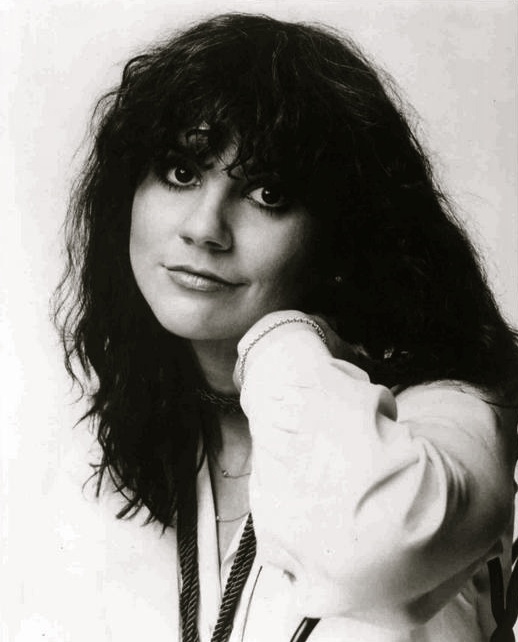
Here is the detail that should astonish anyone who loves this recording: Ronstadt and Ingram were never in the studio at the same time. They recorded in separate sessions, in separate cities, their voices later woven together by producer Peter Asher — Ronstadt’s longtime collaborator — who had to align their phrasing, match their breathing, make two solitudes into one conversation. He described the challenge in a 2018 interview: two great vocals, recorded apart, had to be made to fit together the way skin fits a hand. This required patience that most people don’t know is there when they listen.
And yet the recording doesn’t sound like engineering. It sounds like longing.
Ronstadt opens the song — her voice clear and silver-edged, holding the melody the way a lamp holds light, steady and without strain. There is no performance anxiety in it, no reaching. She sings the opening verse the way you’d speak something true to someone in the dark: plainly, directly, with the quiet certainty of someone who has already decided to believe.
Then Ingram answers. His voice is deeper, warmer, carrying the weight of something earned rather than inherited — the sound of a man who has lived inside his grief long enough to find the floor of it. Together they build the chorus not by overpowering each other but by leaning, the way two people lean against each other in cold weather. That lean is the whole emotional point of the song.
What Cynthia Weil’s lyric understands — and what the two voices make physical — is that distance is most bearable when it is shared. The song is not about reunion. It is about the sustaining fiction of simultaneous longing: we are both awake under the same sky, we are both wishing on the same star. Whether or not this is true doesn’t matter. What matters is the willingness to believe it. That willingness is what both voices carry. That willingness is why the song works.
What the World Did with It
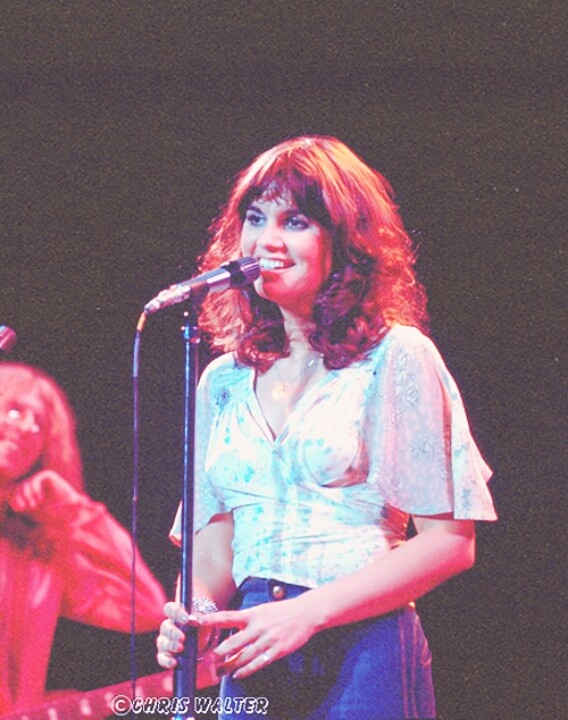
In the film, the song is sung by siblings — young Fievel and his sister Tanya, separated by a continent, each alone in the dark. In the pop version recorded by Ronstadt and Ingram, the love becomes more explicitly romantic, yet the innocence at the song’s core never disappears. That double register — childlike and grown-up, familial and romantic, innocent and aching — is what made the song land so widely. People heard in it whatever separation they were carrying.
The single debuted at number 83 on the Billboard Hot 100 in December 1986, climbed steadily, and peaked at number two in March 1987 — returning Ronstadt to the Top 40 after four years away. At the 30th Grammy Awards, it won Song of the Year and Best Song Written Specifically for a Motion Picture or Television. It became a gold single — one of the last 45s ever to sell a million copies. The format itself was disappearing. The song arrived just as the world it traveled through was changing shape.
Then Liza Minnelli took it to Carnegie Hall in early 1987, in a three-week engagement that the New York Times called a showcase for her stunning rendition of the song. It passed into the repertoire of people who had never seen the film, who didn’t know about mice or immigration or Steven Spielberg’s hunch. It became the kind of song people sing when they are far from home and need to believe the distance can be crossed.
There is something fitting in the fact that this recording was assembled from two separate performances, two singers who never shared a room. The song asks us to find comfort in knowing that someone far away is looking at the same moon. The recording was made by doing exactly that — two people in different places, trusting that the space between them could become something whole.
Peter Asher brought them together in the edit. The rest happened in the ear of everyone who heard it, late at night, alone, wanting very much to believe that somewhere out there, someone else was awake, and wishing, and thinking of them too.

Hey readers! Chip Holland here, and I’m a Manager of this website. My passion for writing about it only matches my passion for BBQ. Follow my blog for mouth-watering recipes, tips, and tricks for the perfect smoke, grill, and BBQ. I’m sure you won’t be disappointed!