
The year is 1993 and Linda Ronstadt is at a particular kind of creative peak — the kind that happens quietly, without fanfare, when an artist stops trying to be recognized and starts trying only to be honest.
By the time she sat down to make the album that would bear this song’s name, she was also doing something new: producing herself, alongside engineer George Massenburg, for the first time in her career without longtime collaborator Peter Asher. That shift — small-sounding on paper — meant that for once, every sonic decision in the room was hers.
>>> Scroll down for the video <<<
The album was recorded partly at George Lucas’s Skywalker Ranch, and it reached only number 92 on the Billboard 200 — a commercial disappointment by any measure. But the critics heard something else. AllMusic called it “one of Ronstadt’s best and most underrated recordings,” and Rolling Stone gave it four out of five stars. The gap between those two verdicts — the charts and the critics — tells you almost everything about what the album was trying to do. It was not competing. withdrawing, in the best sense, into something more delicate and interior.
The Song That Didn’t Belong to Anyone
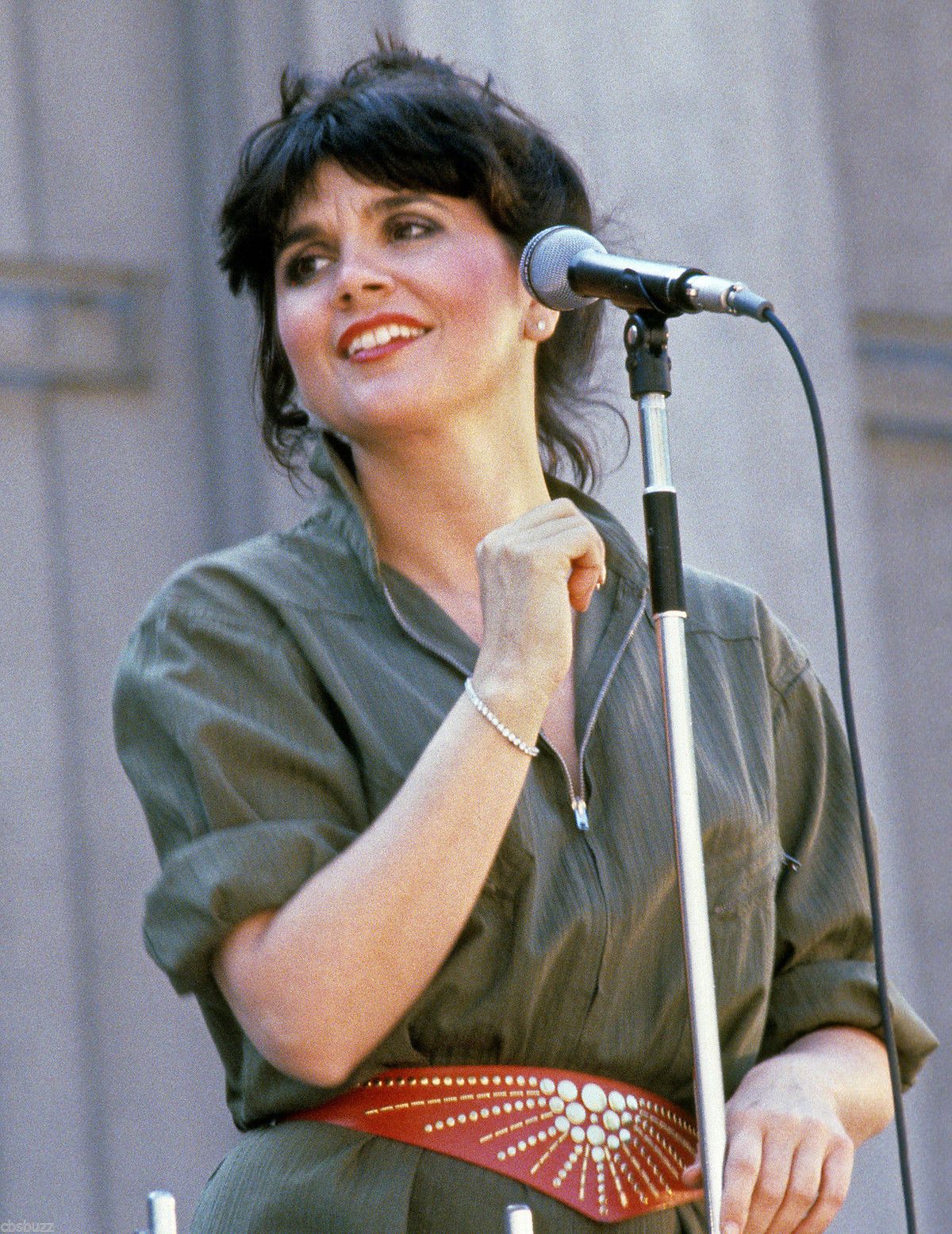
“Winter Light” began with a phone call. A friend named Fred Fuchs, working on Agnieszka Holland’s 1993 film The Secret Garden, reached out to Ronstadt because the filmmakers hadn’t been able to find a title song that satisfied them. Ronstadt asked them to send her the film and its score. She watched. She listened. Then, with her collaborator Eric Kaz and the film’s Polish composer Zbigniew Preisner credited as co-writers, she and Kaz combined two themes from the existing soundtrack into a new verse, chorus, and bridge, and then divided the lyrics between them. Preisner and Holland both approved.
What resulted is one of the stranger compositional origins in Ronstadt’s catalog — a song built not from raw invention but from careful attention. She watched a movie about a locked garden returning to life, listened to the sounds that Preisner had already given that story, and then found words that fit the shape of what she heard. There is something almost botanical about that process. Not planting from seed but grafting — joining living material so that it grows together into something new.
The song played over The Secret Garden’s closing credits, but was not included on the film’s original soundtrack release. It ended up, then, in an in-between place: heard by filmgoers as the screen went dark, present but uncatalogued, like something half-remembered from a dream. When Ronstadt placed it at the end of the Winter Light album, it took on a different gravity — the final word in a collection she had crafted herself, chosen and positioned by her own hand.
The lyric moves in small, stark images: hearts that call and fall, life that grows hollow and serene, a star in the twilight, hope that whispers. There is no dramatic arc, no narrative spine. The song does not build toward revelation — it rests inside one, like a room where the windows have been left open and the outside world has drifted in. Ronstadt said later in an interview with Uncut that she believed she did some of her best singing on the Winter Light album. That is the remark of someone who heard herself clearly, from the inside.
What the Song Carries Now
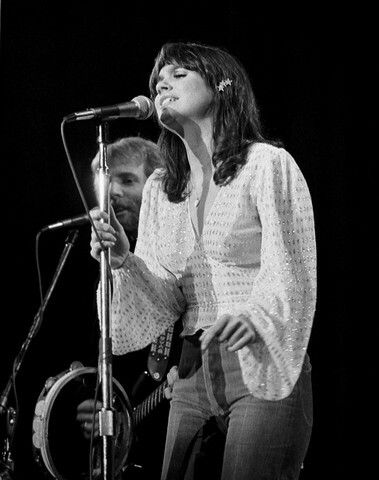
There is a shadow that falls over “Winter Light” that was not there when Ronstadt recorded it — one that has nothing to do with the film it was written for, and everything to do with what happened to the voice that sang it.
By around the year 2000, Ronstadt had begun noticing something wrong with her voice. Her throat would tighten mid-phrase, the upper register she had always relied on began to slip away. She kept performing for nearly a decade more, pushing through what she described as a kind of muscular seizure — the first note arriving, then the voice clenching shut.
She gave her final concert on November 7, 2009, in San Antonio, Texas, and then quietly declined all invitations to sing again. In 2013, she was diagnosed with progressive supranuclear palsy, related to Parkinson’s disease. “No one can sing with Parkinson’s disease,” she said. “No matter how hard you try. And in my case, I can’t sing a note.”
She also said something else, more quietly devastating: “I can sing in my brain. I sing in my brain all the time. But it’s not quite the same as doing it physically.”
Ronstadt later placed “Winter Light” on her 1996 children’s album Dedicated to the One I Love, a Grammy-winning record of lullabies. She said she put it there so she could get her children to sleep, and that it worked like a charm. That is the other life the song led — not in the credits of a film, not at the tail end of a critically admired adult album, but in the dark of a child’s room, the voice coming from a speaker while small eyes grew heavy. A song about wandering and salvation and clear sky all around you, doing exactly the work it was written to do.
Hey readers! Chip Holland here, and I’m a Manager of this website. My passion for writing about it only matches my passion for BBQ. Follow my blog for mouth-watering recipes, tips, and tricks for the perfect smoke, grill, and BBQ. I’m sure you won’t be disappointed!